
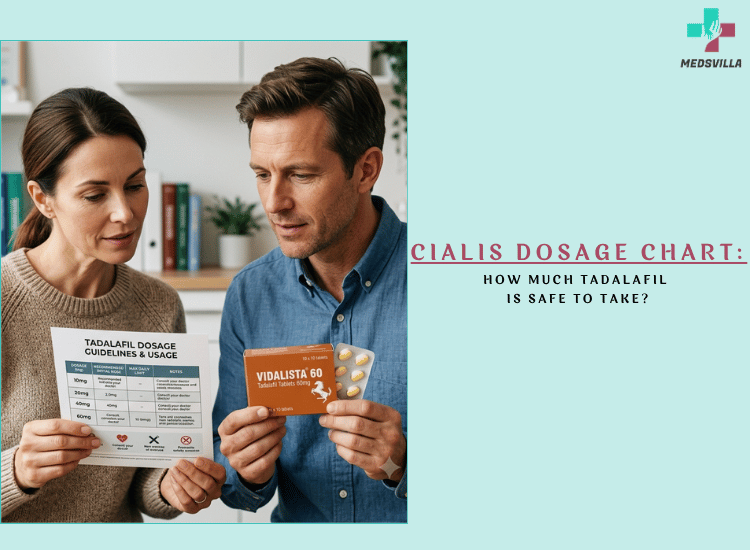
Cialis Dosage Chart: How Much Tadalafil Is Safe To Take?
Tadalafil, commonly sold under the brand name Cialis, is a prescription medicine used to treat erectile dysfunction (ED) and certain urinary symptoms caused by an enlarged prostate. The Cialis dosage chart explains safe dosing.It belongs to a group of medicines called PDE5 inhibitors and works by improving blood flow when sexual stimulation occurs.
Your tadalafil dose depends on why you take it, your health, other medicines, and your response. Taking a higher dose does not necessarily provide better results and may increase the risk of side effects. Male Viagra before and after size can help explain what changes men may notice with Viagra. This tadalafil dosage chart explains common dosing options and how they are generally used.
Tadalafil Dosage Chart
| Tadalafil Dose | Common Use | Typical Dosing Pattern | Key Point |
|---|---|---|---|
| 2.5 mg | Erectile dysfunction | Once daily | Lower daily dose |
| 5 mg | ED or enlarged prostate symptoms | Once daily | Common daily option |
| 10 mg | ED | As needed | Common starting dose for many adults |
| 20 mg | ED | As needed | Higher as-needed dose |
| 40 mg | Certain pulmonary hypertension conditions | Once daily | Used for a different medical condition under medical supervision |
Tadalafil dosage can vary from person to person. The doses listed above are general dosing categories, not a recommendation to choose a dose without medical advice.
What Is the Usual Cialis Dose for ED?
For many adults with erectile dysfunction, tadalafil may be prescribed as an as-needed treatment. A commonly used starting dose is 10 mg before anticipated sexual activity. A healthcare professional may adjust your dose based on results and side effects. Some people may use 5 mg, while others may be prescribed 20 mg.
Take tadalafil no more than once a day for ED. Cialis Dosage Chart covers common Cialis strengths. A healthcare professional may recommend a different schedule based on your condition.
Daily vs. As-Needed Tadalafil
Tadalafil can be used in two common ways for erectile dysfunction: once daily or as needed.
Once-Daily Tadalafil
Daily treatment uses a lower dose taken at approximately the same time each day. Common doses include 2.5 mg and 5 mg. Daily tadalafil may be considered when a person expects to have sexual activity more frequently or wants a treatment option that does not require planning around each sexual encounter.
As-Needed Tadalafil
As-needed tadalafil is taken before anticipated sexual activity. Common tadalafil doses include 10 mg and 20 mg. Tadalafil may last up to 36 hours, but it does not cause a constant erection.
How Much Cialis Is Safe to Take?
There is no single tadalafil dose that is safe or appropriate for everyone. The right tadalafil dose depends on several factors:
- Age
- Kidney function
- Liver function
- Other health conditions
- Other medicines being taken
- How well tadalafil works
- Side effects experienced with previous doses
A higher dose can increase the chance of unwanted effects. Do not take a higher tadalafil dose if the medicine does not work right away. If your prescribed dose is not providing enough benefit, speak with a healthcare professional instead of taking extra tablets.
Can You Take 20 mg of Tadalafil?
Tadalafil 20 mg is a commonly used higher as-needed strength for ED. A commonly used dose may not suit everyone. Some people may experience more side effects at 20 mg than at a lower dose. Common tadalafil side effects include headache, indigestion, flushing, congestion, back pain, and muscle aches. Follow your healthcare professional’s dosing instructions.
What About 40 mg, 60 mg, or 80 mg of Tadalafil?
Higher amounts such as 40 mg, 60 mg, or 80 mg are not standard ED doses and should not be used for self-treatment of erectile dysfunction. A 40 mg tadalafil dose is used for certain other medical conditions, such as pulmonary arterial hypertension, under specialist supervision. It should not be confused with the usual tadalafil dosing approach for ED.
Taking excessive amounts of tadalafil can increase the risk of adverse effects and potentially serious complications. If you have accidentally taken more tadalafil than prescribed, seek medical advice promptly.
When Should You Take Tadalafil?
When tadalafil is prescribed for use as needed, it is commonly taken before anticipated sexual activity. Take tadalafil with or without food. Unlike some shorter-acting ED medicines, tadalafil has a relatively long duration of action. Tadalafil provides a longer window for erectile support.
Tadalafil needs sexual stimulation to work. Sexual stimulation is necessary. For daily tadalafil, take it at about the same time each day and follow the schedule given by your healthcare professional.
How Long Does Tadalafil Take to Work?
Tadalafil may begin working in about 30 minutes. Taking another tablet because the first dose does not seem to work quickly can be unsafe. Give the medicine adequate time to take effect and follow your prescribed dosing schedule. Several factors can influence your response, including your health, sexual stimulation, anxiety, and other medicines.
Common Tadalafil Side Effects
Tadalafil is generally tolerated by many people, but side effects can occur. Check the Cialis dosage chart before use. Common side effects include:
- Headache
- Indigestion
- Back pain
- Muscle aches
- Flushing
- Stuffy or runny nose
- Dizziness
The onset time can vary between individuals. These side effects are often mild, but severe or persistent symptoms need medical advice.
Important Tadalafil Drug Interactions
Tadalafil can interact with certain medicines. One of the most important interactions involves nitrates, which are commonly used to treat chest pain. Use the Cialis dosage chart to compare doses. Never combine tadalafil with nitrates because the combination can dangerously lower blood pressure.
Tadalafil may also interact with certain alpha-blockers, blood-pressure medicines, and other medications. Avoid taking tadalafil with another PDE5 inhibitor unless specifically instructed by a healthcare professional.
Who Should Be Careful With Tadalafil?
People with certain medical conditions may need a lower dose, a different treatment, or additional monitoring. Cialis dosage chart shows common tadalafil doses. Use extra caution if you have:
- Heart or cardiovascular problems
- Kidney disease
- Liver disease
- Low blood pressure
- Uncontrolled high blood pressure
- A history of certain vision problems
- A history of prolonged erections
Your healthcare professional can determine whether tadalafil is appropriate and which dose fits your situation.
What Happens If You Take Too Much Tadalafil?
Taking more tadalafil than prescribed can increase the likelihood and severity of side effects. You may experience severe headache, dizziness, low blood pressure, flushing, or other symptoms. Cialis before and after photos can show how Cialis may affect erection firmness and performance. In rare cases, serious complications can occur.
An erection lasting more than four hours is a medical emergency because it can cause permanent damage if untreated. Seek emergency medical care if this happens. Do not take another tadalafil tablet to compensate for a missed or ineffective dose unless your healthcare professional specifically tells you to do so.
Tips for Taking Tadalafil Safely
Follow these basic precautions when using tadalafil:
- Take only the prescribed dose.
- Do not take tadalafil more than once daily unless specifically instructed.
- Never combine it with nitrate medicines.
- Do not increase the dose on your own.
- Avoid combining tadalafil with other ED medicines unless medically advised.
- Seek urgent help for an erection lasting longer than four hours.
- Discuss persistent side effects with your healthcare professional.
Final Thoughts
The right tadalafil dosage depends on the individual and the reason for treatment. For ED, common options include lower daily doses of 2.5 mg or 5 mg and as-needed doses of 10 mg or 20 mg. Higher amounts should not be used for self-treatment.
The safest approach is to use tadalafil exactly as prescribed and avoid changing the dose on your own. If your current dose is not working well or is causing side effects, talk with a healthcare professional about whether an adjustment is appropriate.
References:

