
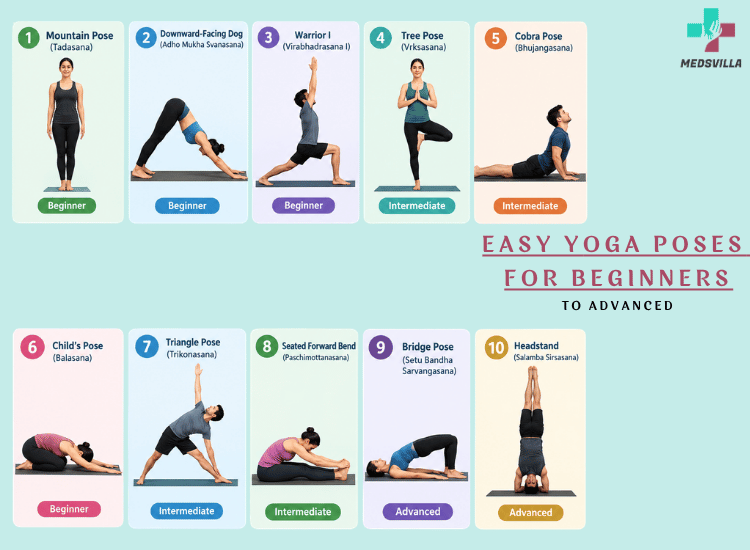
10 Easy Yoga Poses For Beginners To Advanced
Yoga is a simple and effective way to improve flexibility, build strength, support balance, and promote relaxation. Whether you are new to exercise or already have an active lifestyle, practising yoga poses for beginners regularly can help you build a healthier routine. The best part is that you do not need expensive equipment or a gym membership to get started.
You can practise many yoga poses, from beginner to advanced, at home. Beginners can start with gentle movements and basic stretches, while experienced practitioners can gradually explore more challenging poses. Yoga starter poses help you begin your daily yoga routine.
In this guide, you will discover 10 yoga poses, their benefits, and how to practise them safely. These poses can help you build a strong foundation and progress at your own pace.
What Are the Benefits of Practising Yoga?
Yoga combines physical postures, controlled breathing, and mindful movement. A regular practice may provide several benefits for your overall well-being. Easy yoga positions improve flexibility and balance. Learn how yoga fits into your wellness routine while researching how long does bluechew last. Some common benefits include:
- Enhanced flexibility: Regular stretching gradually increases your range of motion.
- Improved balance: Standing yoga poses help develop stability and body awareness.
- Increased strength: Many poses engage your core, legs, arms, and back.
- Stress management: Slow breathing and mindful movement may help you relax.
- Improved posture: Yoga can help you become more aware of how you sit, stand, and move.
- Better body awareness: Regular practice helps you recognise your limits and move with greater control.
You do not need to master every pose immediately. Consistency and proper technique are more important than achieving a perfect position.
10 Easy Yoga Poses for Beginners to Advanced
Here are 10 beginners poses for yoga arranged from beginner-friendly movements to more challenging options. Basic yoga poses help build strength and body awareness. Select variations that suit your current fitness and comfort level.
1. Mountain Pose (Tadasana)
Mountain Pose is one of the best starting points for beginners. The basic position of yoga supports better posture and alignment. Although it looks simple, it helps you develop proper alignment, posture, and balance.
How to do it:
- Stand with your feet hip-width apart.
- Keep your arms relaxed beside your body.
- Distribute your weight evenly across both feet.
- Lengthen your spine and relax your shoulders.
- Breathe slowly while looking straight ahead.
Benefits: Mountain Pose improves body awareness, encourages upright posture, and prepares you for standing yoga poses. This easy yoga pose helps beginners relax and stretch.
Difficulty level: Beginner.
Tip: Avoid locking your knees or lifting your shoulders towards your ears.
2. Child’s Pose (Balasana)
Child’s Pose is a gentle resting position that beginners can use between more demanding movements. Simple yoga can support relaxation and overall wellness. It is also useful when you need a short break during your yoga session. How to yoga at home with simple beginner-friendly steps.
How to do it:
- Kneel on your yoga mat.
- Bring your big toes together and widen your knees if comfortable.
- Slowly lower your hips towards your heels.
- Stretch your arms forward or keep them relaxed alongside your body.
- Relax your neck and breathe naturally.
Benefits: This pose gently stretches the back and hips while encouraging relaxation.
Difficulty level: Beginner.
Tip: Place a cushion under your hips or forehead for additional comfort. Avoid forcing your hips towards your heels. The best yoga pose depends on your fitness level and goals.
3. Cat-Cow Pose (Marjaryasana-Bitilasana)
Cat-Cow Pose is a gentle movement that warms up the spine. It is especially helpful before practising more challenging yoga poses.
How to do it:
- Start on your hands and knees.
- Position your wrists beneath your shoulders and knees beneath your hips.
- Inhale, gently lift your chest and tailbone.
- As you exhale, gently round your back and bring your chin toward your chest.
- Continue moving slowly with your breath.
Benefits: Cat-Cow encourages spinal mobility, warms up the back, and helps coordinate breathing with movement.
Difficulty level: Beginner.
Tip: Keep the movements comfortable and avoid forcing your neck or lower back. Easy yoga poses for beginners help build flexibility and strength.
4. Downward-Facing Dog (Adho Mukha Svanasana)
Downward-Facing Dog is a popular yoga pose that stretches several muscle groups while building upper-body strength.
How to do it:
- Begin on your hands and knees.
- Spread your fingers wide and firmly press your palms against the mat.
- Lift your hips up and back.
- Keep your knees slightly bent if your hamstrings feel tight.
- Relax your neck and breathe steadily.
Benefits: This pose stretches the calves, hamstrings, and back while engaging the arms and shoulders.
Difficulty level: Beginner to intermediate.
Tip: Focus on lengthening your spine rather than forcing your heels to touch the floor. Yoga stretches for beginners improve mobility and flexibility.
5. Warrior I (Virabhadrasana I)
Warrior I is a standing yoga pose that develops strength, stability, and body awareness. Discover yoga and healthy lifestyle tips while looking for information about Kamagra Brisbane. It is a useful next step after learning basic standing postures. Best yoga poses can improve balance and body strength.
How to do it:
- Stand upright and step one foot back.
- Turn your back foot slightly outward.
- Bend your front knee while keeping it aligned with your foot.
- Keep your hips facing forward as comfortably as possible.
- Lift your arms overhead if your shoulders feel comfortable doing so.
Repeat on the opposite side.
Benefits: Warrior I strengthens the legs, engages the core, and stretches the hip flexors.
Difficulty level: Beginner to intermediate.
Tip: Shorten your stance if you struggle to maintain balance or keep your front knee comfortable.
6. Tree Pose (Vrikshasana)
Tree Pose is a balancing posture that challenges your stability and concentration. Beginners can start with their toes resting on the floor for support.
How to do it:
- Stand tall with your feet together.
- Shift your weight onto one leg.
- Place the sole of your other foot against your ankle or inner calf.
- Bring your hands together at your chest.
- Focus on a stationary point and breathe naturally.
Repeat on the other leg.
Benefits: Tree Pose improves balance, strengthens the standing leg, and develops concentration. Best yoga poses help support a healthy daily routine.
Difficulty level: Beginner to intermediate.
Tip: Avoid placing your foot directly against the side of your knee. Use a wall for support if needed. Simple yoga poses for beginners make starting yoga easier.
7. Bridge Pose (Setu Bandhasana)
Bridge Pose is a beginner-friendly backbend that activates the glutes and legs. It can also introduce you to more advanced backbending movements. This simple yoga exercise helps you stay active at home.
How to do it:
- Lie on your back with knees bent and feet flat.
- Keep your feet flat on the floor, hip-width apart.
- Place your arms beside your body.
- Push down through your feet and slowly raise your hips.
- Hold briefly while breathing normally, then lower slowly.
Benefits: Bridge Pose strengthens the glutes and legs while gently opening the front of the hips.
Difficulty level: Beginner to intermediate.
Tip: Keep your knees pointing forward and avoid turning your head while your hips are raised.
8. Plank Pose (Phalakasana)
Plank Pose is an effective yoga posture for developing core strength and stability. It can be adjusted to suit different fitness levels. Yoga poses support flexibility, balance, and strength.
How to do it:
- Start on your hands and knees.
- Step both feet back into a straight-body position.
- Keep your hands beneath your shoulders.
- Engage your abdominal muscles and legs.
- Hold for a few comfortable breaths.
Benefits: Plank Pose strengthens the core, shoulders, arms, and legs.
Difficulty level: Beginner to advanced, depending on the variation.
Tip: Start with your knees on the floor. Keep your hips aligned, avoiding letting them drop too low or lift too high.
9. Boat Pose (Navasana)
Boat Pose is a more challenging posture that focuses on abdominal strength and balance. Beginners can keep their knees bent and their feet close to the floor.
How to do it:
- Sit on the floor with your knees bent and feet resting flat.
- Lean your upper body back slightly while keeping your spine long.
- Lift one foot at a time if comfortable.
- Extend your arms forward.
- Hold briefly while breathing steadily.
Benefits: Boat Pose strengthens the abdominal muscles and challenges balance and coordination.
Difficulty level: Intermediate.
Tip: Keep your knees bent whenever necessary. Stop if you experience lower-back pain. Yoga poses for women can support strength and flexibility.
10. Crow Pose (Bakasana)
Crow Pose is an advanced balancing posture that requires coordination, upper-body strength, and confidence. Explore how yoga supports wellness while searching for women viagra before and after photos to understand different health topics. Beginners should first build strength with Plank Pose and practise under qualified instruction.
How to do it:
- Start in a low squat with your feet on the mat.
- Position your hands firmly on the floor, keeping them shoulder-width apart.
- Bend your elbows slightly and position your knees near your upper arms.
- Shift your weight forward gradually.
- If you feel stable, lift one foot and then the other.
Benefits: Crow Pose develops balance, coordination, and upper-body and core strength. A chart of yoga poses for beginners helps you learn basic postures easily.
Difficulty level: Advanced.
Tip: Practise on a soft surface with an instructor if possible. Do not jump into the pose or continue if you feel wrist pain.
Yoga Poses by Difficulty Level
| Difficulty Level | Recommended Yoga Poses | Main Focus |
|---|---|---|
| Beginner | Mountain Pose, Child’s Pose, Cat-Cow Pose | Posture, mobility, relaxation |
| Beginner to Intermediate | Downward-Facing Dog, Warrior I, Tree Pose, Bridge Pose | Strength, flexibility, balance |
| Intermediate | Plank Pose, Modified Boat Pose | Core strength and stability |
| Advanced | Crow Pose | Balance, coordination, upper-body strength |
How to Start a Simple Yoga Routine
If you are new to yoga, begin with a short routine that feels manageable.
- Warm up for 3–5 minutes: Try gentle movements and Cat-Cow Pose.
- Practise basic poses for 10 minutes: Include Mountain Pose, Child’s Pose, and Downward-Facing Dog.
- Add strength and balance for 5 minutes: Try Warrior I, Tree Pose, or a modified Plank.
- Finish with relaxation: Rest comfortably and breathe slowly for a few minutes.
Practise two to four times per week initially, adjusting the frequency to your comfort and recovery. As you become more comfortable, gradually extend the duration of the pose.
Wear comfortable clothing, use a non-slip yoga mat, and keep water nearby. Never force a stretch or hold your breath to maintain a pose.
Conclusion
These 10 easy yoga poses for beginners to advanced practitioners provide a practical starting point for building a regular yoga routine. From Mountain Pose and Child’s Pose to Plank Pose and Crow Pose, each posture offers a different way to develop strength, flexibility, balance, and body awareness.
References:
- https://pmc.ncbi.nlm.nih.gov/articles/PMC10184339/
- https://www.healthline.com/health/fitness-exercise/morning-yoga-routine

