
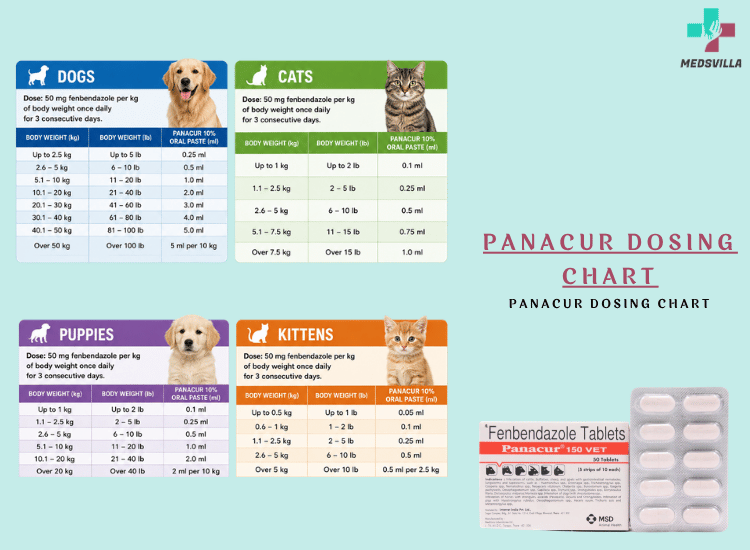
Panacur Dosing Chart For Dogs, Cats, Puppies and Kittens
Panacur is a veterinary deworming product that contains fenbendazole. It is commonly used by veterinarians to treat certain intestinal parasites in dogs and cats. Panacur may also be used in puppies and kittens when appropriate for their age, weight, and health status. Panacur Dosing Chart shows dosing by weight.
Because the correct dose depends on the animal, body weight, parasite being treated, and product formulation, pet owners should follow a veterinarian’s instructions and the product label. The chart below is a general educational guide and should not replace professional veterinary advice.
What Is Panacur?
Panacur is a brand name associated with fenbendazole, a broad-spectrum anthelmintic. Fenbendazole works against several types of intestinal worms and parasites. Fenbendazole for cats dosage chart by weight helps explain weight-based dosing.
Veterinarians may recommend fenbendazole for conditions involving parasites such as roundworms, hookworms, whipworms, and certain tapeworm species. Panacur Dosing Chart helps pet owners understand weight-based dosing.
It may also be used for some protozoal infections under veterinary direction. Panacur is available in different formulations, including oral pastes, liquids, and granules. The concentration can vary between products, so always check the package before calculating a dose. Panacur for cats should be used according to veterinary guidance.
Panacur Dosing Chart for Dogs, Cats, Puppies and Kittens
The following details provide a simple overview of commonly referenced fenbendazole dosing information. Panacur dosage for dogs depends on the dog’s weight and condition. It is not a substitute for a veterinarian’s prescription or the specific Panacur product label.
| Animal | Fenbendazole Reference Dose | Typical Frequency | Important Note |
|---|---|---|---|
| Adult Dogs | 50 mg/kg | Once daily | Often given for several consecutive days |
| Puppies | 50 mg/kg | Once daily | Age and parasite type matter |
| Adult Cats | 50 mg/kg | Once daily | Veterinary guidance is recommended |
| Kittens | 50 mg/kg | Once daily | Use only when appropriate for age and weight |
These details reflect a commonly referenced 50 mg/kg/day fenbendazole regimen for certain veterinary indications. Panacur dosing for cats should follow the recommended veterinary schedule. Treatment duration and suitability vary by parasite, species, age, health status, and product.
Panacur Dosage for Dogs
Fenbendazole is commonly used in dogs for several intestinal parasites. A frequently referenced dose is 50 mg per kg of body weight once daily, but the treatment duration can vary.
For example, a veterinarian may recommend a multi-day course for certain intestinal worm infections. Dogs with suspected parasites should be evaluated based on their symptoms, fecal testing, age, weight, and medical history. Panacur for cats dosage may vary based on the parasite being treated.
Accurate weighing is important. Giving too little medication may result in ineffective treatment, while incorrect dosing can increase the risk of adverse effects. Panacur liquid for dogs dosage should be checked against the product label.
Dog Dosage Reference Details
| Dog Weight | Reference Amount at 50 mg/kg |
|---|---|
| 2 kg | 100 mg |
| 5 kg | 250 mg |
| 10 kg | 500 mg |
| 15 kg | 750 mg |
| 20 kg | 1,000 mg |
| 30 kg | 1,500 mg |
| 40 kg | 2,000 mg |
These figures show the mathematical amount of fenbendazole at 50 mg/kg. They do not tell you how much of a particular Panacur product to administer because products have different concentrations.
Panacur for Puppies
Puppies are particularly vulnerable to intestinal parasites. Roundworms and hookworms are common concerns, and puppies may acquire certain parasites from their mother or environment. Panacur puppy use should be discussed with a veterinarian. Panacur liquid dosage for dogs depends on the product concentration. Refer to the Panacur Dosing Chart for different pet sizes.
Fenbendazole may be recommended for puppies when a veterinarian determines that it is appropriate. The puppy’s exact age, weight, symptoms, parasite type, and overall health should be considered. Do not estimate a puppy’s dose using an adult dog’s tablet or packet. Puppies grow quickly, so their weight should be checked regularly.
Panacur Dosage for Cats
Fenbendazole is also used in veterinary medicine for some feline parasite infections. However, cats should not automatically receive the same treatment schedule as dogs. Panacur cats dosage should be calculated using accurate body weight.
A veterinarian may recommend a fenbendazole regimen based on the suspected or confirmed parasite. The cat’s weight and the concentration of the product are also important. Panacur dose for cats should only be given as directed by a veterinarian.
If your cat has vomiting, diarrhea, weight loss, poor appetite, or visible worms, veterinary evaluation can help determine the underlying cause.
Panacur for Kittens
Kittens can develop intestinal parasite infections at a young age. However, treatment should be selected carefully because very young animals are more sensitive to medication and dehydration.
Before giving Panacur to a kitten, confirm the kitten’s weight and age and speak with a veterinarian. A fecal examination may also help identify the parasite and determine whether fenbendazole is appropriate. Never assume that a dose intended for an adult cat is safe for a kitten.
Possible Side Effects
Panacur (fenbendazole) is generally well tolerated when used at the recommended dose. However, some dogs, cats, puppies, or kittens may experience mild side effects. Common possible side effects include:
- Vomiting
- Diarrhea or loose stools
- Reduced appetite
- Mild stomach upset
- Tiredness or temporary lethargy
These effects are usually mild and temporary. However, contact your veterinarian if symptoms are severe, continue for more than a short period, or your pet appears weak, dehydrated, or unusually unwell.
How to Calculate Fenbendazole Dosage
The basic calculation for a 50 mg/kg reference dose is:
Body weight in kilograms × 50 mg = daily fenbendazole amount
For example, if a veterinarian recommends 50 mg/kg for a 10 kg dog:
10 kg × 50 mg = 500 mg per day
This calculation gives the amount of active fenbendazole. It does not automatically equal the amount of paste, liquid, or granules to give. Always check the product concentration before converting milligrams into milliliters, grams, or another measurement.
Why Accurate Weight Matters
Weight-based dosing helps ensure that the animal receives an appropriate amount of medication. Guessing a pet’s weight can lead to an incorrect dose. Use a reliable pet scale when possible. For larger dogs, a veterinary clinic can provide an accurate weight.
The Panacur Dosing Chart helps organize weight-based dosing information. If your pet’s weight changes, ask your veterinarian to recalculate the dose.
Panacur Safety Tips
Keep these points in mind when using Panacur or fenbendazole product:
- Weigh your pet before calculating a weight-based dose.
- Check the exact product concentration.
- Follow the veterinarian’s recommended treatment duration.
- Do not use a dog dosage automatically for cats or kittens.
- Do not share medication between animals without veterinary guidance.
- Store the product according to its label.
- Complete the recommended course when instructed by your veterinarian.
Final Thoughts
Panacur, containing fenbendazole, is an established veterinary deworming medication used for certain parasitic infections in dogs and cats. Fenbendazole and alcohol should be discussed with a veterinarian before use. Dosing depends on weight and the parasite, so get an accurate diagnosis and veterinary advice.
The 50 mg/kg reference calculation can help explain how weight-based dosing works, but pet owners should always check the exact Panacur formulation and follow the veterinarian’s instructions. Puppies and kittens require particular care because their age, weight, and health can affect treatment decisions.
FAQs
Q: Can dogs and cats use Panacur?
Fenbendazole products may be used in both dogs and cats for certain veterinary conditions, but the appropriate regimen can differ. Use the product according to veterinary instructions.
Q: How often is Panacur given?
The frequency depends on the condition being treated and the product used. A commonly referenced regimen for certain infections is once daily for several days, but your veterinarian should determine the appropriate schedule.
Q: Can puppies take Panacur?
Fenbendazole may be used in puppies when appropriate. The puppy’s age, weight, health, and parasite infection should be considered before treatment.
Q: Can kittens take Panacur?
A veterinarian may recommend fenbendazole for certain kittens, but treatment should be based on the kitten’s age, weight, and diagnosis.
Q: Is 50 mg/kg appropriate for every parasite?
No. 50 mg/kg is a commonly referenced fenbendazole dose for certain veterinary indications, not a universal treatment for every parasite or every animal. Treatment duration and medication choice can vary.
References:

