
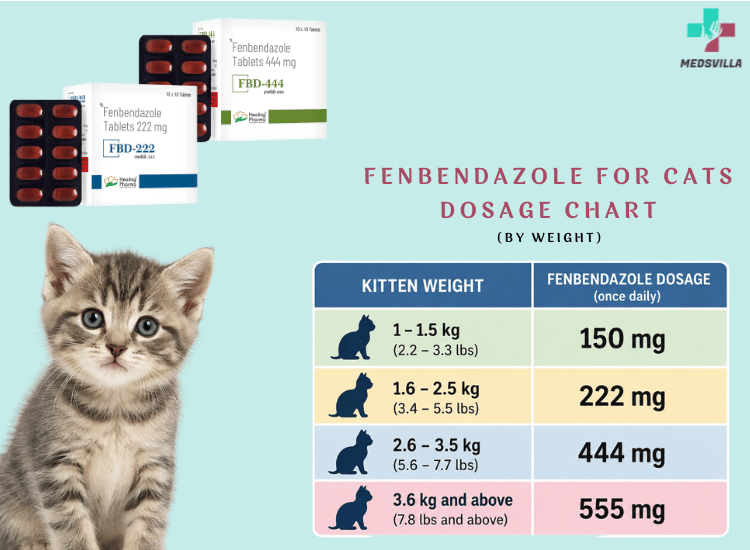
Fenbendazole For kittens Dosage Chart: Safe Weight Guide
Fenbendazole is a widely used deworming medication that helps treat common intestinal parasites in kittens. Veterinarians often recommend it for roundworms, hookworms, whipworms, and certain types of tapeworm infections. Using the correct fenbendazole dose is important, as too little may not clear parasites and too much can increase the risk of side effects.
This guide explains the recommended fenbendazole dosage for kittens, provides a weight-based dosage chart, discusses safety precautions, and answers common questions pet owners have about this medication.
What Is Fenbendazole?
Fenbendazole is a broad-spectrum dewormer used to treat parasites in many animals. It works by disrupting the parasites’ energy metabolism, causing them to die and be expelled from the body. Fenbendazole dosage should always be determined based on the animal’s weight and veterinary recommendations.
Fenbendazole treats common intestinal parasites in kittens, including roundworms, hookworms, whipworms, some tapeworms, and Giardia.
Since kittens are highly susceptible to these parasites during their early months, routine deworming with the appropriate medication is often an essential part of their preventive healthcare and healthy development.
Why Kittens Need Deworming
Young kittens can acquire worms from their mother, contaminated environments, or infected prey. Parasites may cause:
- Diarrhea
- Vomiting
- Weight loss
- Pot-bellied appearance
- Poor growth
- Anemia
- Weak immune function
Regular deworming helps kittens grow properly and reduces the risk of severe health complications.
Fenbendazole Dosage for Kittens
The standard veterinary dosage for kittens is:
The standard fenbendazole dose is 50 mg/kg (22.7 mg/lb) once daily for 3 days.
The exact amount depends on your kitten’s weight and the product concentration being used.
Fenbendazole Dosage Chart for Kittens
| Kitten Weight | Weight (kg) | Daily Fenbendazole Dose |
|---|---|---|
| 1 lb | 0.45 kg | 22.5 mg |
| 2 lbs | 0.91 kg | 45.5 mg |
| 3 lbs | 1.36 kg | 68 mg |
| 4 lbs | 1.81 kg | 90.5 mg |
| 5 lbs | 2.27 kg | 113.5 mg |
| 6 lbs | 2.72 kg | 136 mg |
| 7 lbs | 3.18 kg | 159 mg |
| 8 lbs | 3.63 kg | 181.5 mg |
| 9 lbs | 4.08 kg | 204 mg |
| 10 lbs | 4.54 kg | 227 mg |
Note: Consult your veterinarian before giving fenbendazole to kittens, especially those younger than 6 weeks. Fenbendazole for kittens is commonly used to treat certain intestinal parasites under veterinary guidance.
How to Calculate Fenbendazole Dosage
You can calculate the proper dose using the following formula:
Dose (mg) = Weight (kg) × 50 mg
Example
If your kitten weighs 2 kg:
- 2 kg × 50 mg
- Daily dose = 100 mg
Administer the medication once daily for the treatment period recommended by your veterinarian. Fenbendazole dose for kittens
Available Fenbendazole Forms
Fenbendazole is available in several formulations:
Oral Suspension
Liquid fenbendazole is easy to measure accurately and mix with food for kittens.
Granules
Granules are commonly mixed into wet food. Ensure your kitten finishes the entire meal to receive the full medication dose.
Paste
Some veterinary products come in paste form, making administration easier for young animals.
Tablets
Tablets may be used in older kittens but can be difficult to administer to very small cats. Does fenbendazole expire is a common question, and yes, fenbendazole should not be used after its expiration date.
How to Give Fenbendazole to Kittens
For the best results:
- Weigh your kitten accurately.
- Calculate the correct dosage.
- Administer with food when possible.
- Complete the entire treatment course.
- Monitor your kitten for any unusual reactions.
Consistency is important because missing doses may reduce treatment effectiveness.
Common Parasites Treated by Fenbendazole
Roundworms
Roundworms are the most frequently diagnosed intestinal parasites in kittens. Symptoms may include bloating, vomiting, and poor growth.
Hookworms
Hookworms feed on blood in the intestines and can cause anemia.
Whipworms
Whipworms are uncommon in cats but can cause diarrhea and weight loss.
Giardia
Fenbendazole is sometimes prescribed as part of a treatment plan for Giardia infections.
Is Fenbendazole Safe for Kittens?
Fenbendazole is safe for kittens when used at the recommended dose. Most kittens tolerate the medication well. However, safety depends on:
- Correct dosage
- Age of the kitten
- Overall health status
- Veterinary supervision
Very young, sick, or underweight kittens should always be evaluated by a veterinarian before treatment.
Potential Side Effects
Side effects are usually mild and uncommon. Possible reactions include:
- Mild diarrhea
- Temporary vomiting
- Reduced appetite
- Lethargy
- Excess salivation
These symptoms typically resolve without treatment. See your veterinarian if symptoms continue or get worse. Many people ask about fenbendazole and alcohol, but you should consult a healthcare professional before combining any medication with alcohol.
Signs of Overdose
Fenbendazole overdoses may cause mild side effects, including:
- Severe vomiting
- Persistent diarrhea
- Weakness
- Loss of appetite
- Dehydration
Seek veterinary assistance immediately if an overdose is suspected.
When Should Kittens Be Dewormed?
Veterinarians often recommend a routine deworming schedule:
| Age of Kitten | Deworming Recommendation |
|---|---|
| 2–3 weeks | First deworming |
| 4–6 weeks | Repeat treatment |
| 8 weeks | Additional treatment |
| Every month until 6 months | Continue deworming as advised by a veterinarian |
| Adult cats | Routine parasite control |
Your veterinarian may adjust the schedule based on fecal test results and parasite risk. Pet owners often wonder how much fenbendazole for kittens is appropriate, and the correct amount depends on the kitten’s body weight.
Tips for Successful Deworming
To improve treatment success:
- Follow the dosage instructions carefully.
- Keep litter boxes clean.
- Wash bedding regularly.
- Treat all pets in the household if advised by your veterinarian.
- Schedule follow-up fecal examinations.
Good hygiene helps prevent reinfection and protects other animals in the home. Following the correct fenbendazole for kittens dosage helps ensure effective parasite treatment and safety.
Veterinary Advice Matters
Every kitten needs an individualized treatment plan. Factors such as age, body weight, the type of parasite being treated, and the kitten’s overall health can all influence the appropriate dosage and treatment plan.
A veterinarian can accurately diagnose the parasite, recommend the most effective medication, determine the correct dosage and treatment duration, and monitor your kitten for any potential complications or side effects. Professional veterinary guidance is especially important for very young kittens, rescue animals, and those that are sick, underweight, or have underlying health conditions.
Conclusion
Fenbendazole is an effective and commonly used dewormer for kittens. The standard dosage is 50 mg per kg of body weight once daily for 3 days, though veterinary recommendations may vary depending on the specific parasite being treated. Using an accurate weight-based dosage chart, following administration instructions, and maintaining good hygiene practices can help ensure successful treatment.
FAQs
Q: How much fenbendazole should I give my kitten?
The typical dosage is 50 mg per kg of body weight once daily for 3 consecutive days, unless your veterinarian recommends otherwise.
Q: Can fenbendazole be given with food?
Yes. Giving fenbendazole with food may make administration easier and help reduce stomach upset.
Q: Is fenbendazole safe for 6-week-old kittens?
Many veterinarians use fenbendazole in kittens around this age, but dosing should always be confirmed by a veterinary professional.
Q: How long does fenbendazole take to work?
Fenbendazole begins working shortly after administration, but complete parasite elimination may take several days.
Q: Can kittens get worms again after treatment?
Yes. Reinfection can occur if kittens are exposed to contaminated environments, infected animals, or parasite eggs. Regular preventive care is important.
References:

