
Why Do I Feel Sick After Working Out? Causes Guide
Feeling sick after a workout can be uncomfortable, especially when you are trying to improve your fitness. Dehydration or overexertion can cause nausea, dizziness, weakness, headaches, and an upset stomach after exercise.
These symptoms can occur after intense training, exercising in hot weather, or working out without enough food or fluids. Occasional discomfort may improve with rest and proper hydration. Frequent or severe symptoms need attention. Knowing what causes post-workout sickness can help you exercise more safely.
Why Do I Feel Sick After Exercise?
Feeling sick after exercise can happen for several reasons. Your body needs energy, oxygen, and fluids to support physical activity. When exercise places too much demand on your body, you may experience nausea or other symptoms. Learn how long does bluechew last and whether side effects can affect your workout.
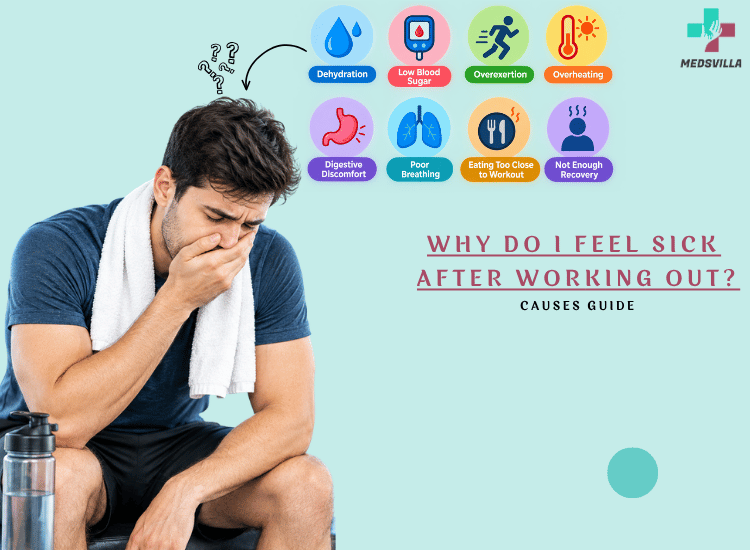
Common causes include dehydration, low blood sugar, intense exercise, overheating, and eating too close to a workout. Fitness levels and medical conditions can also contribute.
Common Causes of Feeling Sick After Exercise
1. Exercising Too Intensely
High-intensity exercise increases your heart rate and places greater demands on your muscles. During strenuous activity, your body directs more blood toward working muscles and less toward your digestive system. This change can contribute to nausea, particularly during demanding workouts.
Increasing exercise intensity too quickly may cause nausea or discomfort afterward. Beginners and people returning to exercise after a break may be more likely to experience this discomfort.
What can help? Start with manageable workouts and increase the intensity gradually. Allow yourself enough recovery time between demanding sessions.
2. Dehydration
You lose water through sweat during exercise. If you do not replace enough fluids, dehydration can develop and cause headaches, fatigue, dizziness, and nausea. The risk increases during long workouts, hot weather, or exercise that causes heavy sweating. You may also feel unusually weak or thirsty after finishing your session.
What can help? Drink water regularly before, during, and after exercise. For prolonged, strenuous exercise or heavy sweating, an electrolyte drink may be useful. Sip water gradually to avoid stomach discomfort.
3. Low Blood Sugar
Your body uses glucose to provide energy during physical activity. Exercising after skipping meals or going several hours without eating may contribute to low blood sugar, particularly in people taking diabetes medications.
Symptoms may include sweating, shakiness, fatigue, hunger, dizziness, and nausea. However, these symptoms do not always mean your blood sugar is low.
What can help? Eat balanced meals and have a light snack before exercising if needed. If you have diabetes, follow your healthcare provider’s guidance on monitoring and managing blood sugar during workouts.
4. Eating Too Close to Your Workout
Eating a heavy meal before exercise may trigger bloating, cramps, nausea, or stomach discomfort. Digestion requires blood flow, while exercise increases the demand for blood in your muscles. Running, jumping, and intense workouts can worsen discomfort after large meals.
What can help? Wait two to three hours after a large meal before vigorous exercise, or choose a light snack closer to your workout. Adjust the timing according to your digestion and exercise intensity.
5. Overheating During Exercise
Working out in hot or humid conditions makes it harder for your body to regulate its temperature. Excessive heat can cause nausea, dizziness, weakness, headache, and heavy sweating. Heat-related illness can become serious if you continue exercising despite these symptoms.
What can help? Exercise during cooler hours, wear breathable clothing, take breaks, and choose a shaded or air-conditioned environment. Stop exercising if you feel unwell.
6. Not Breathing Properly
Holding your breath during weightlifting or breathing too quickly during intense exercise can contribute to dizziness and discomfort. Poor breathing technique may also make a workout feel more demanding than necessary.
What can help? Maintain steady breathing throughout your workout. During strength training, breathe out during the effort and breathe in during the easier phase. Reduce your pace if you become dizzy or breathless.
7. Exercising on an Empty Stomach
Some people tolerate fasted exercise, particularly at a low intensity. However, others may experience nausea, weakness, or lightheadedness when they exercise without adequate energy.
Long workouts and demanding training sessions may increase the likelihood of discomfort if you have not eaten enough.
What can help? Try a small, easily digested snack before exercise, such as a banana or toast. Pay attention to how your body responds and avoid pushing through persistent symptoms.
Common Symptoms and What They May Mean
| Symptom After Exercise | Possible Cause | What to Do |
|---|---|---|
| Nausea or Upset Stomach | Intense exercise or eating too soon | Rest and adjust meal timing |
| Dizziness or Lightheadedness | Dehydration, overheating, or other causes | Stop exercising and sit or lie down safely |
| Shakiness or Weakness | Possible low blood sugar or fatigue | Rest and assess symptoms |
| Headache and Thirst | Possible dehydration or heat stress | Cool down and drink fluids if safe |
| Stomach Cramps | Digestive discomfort or exercise intensity | Slow down and allow recovery |
| Unusual Exhaustion | Excessive effort or inadequate recovery | Rest and reduce training intensity |
These symptoms can have several causes, so the table is a guide rather than a diagnosis.
How to Prevent Feeling Sick After Working Out
You can often reduce post-workout discomfort by making a few changes to your routine.
- Warm up properly: Start with five to ten minutes of light activity before increasing your intensity.
- Stay hydrated: Drink fluids throughout the day and replace losses during longer workouts.
- Eat at the right time: Avoid large meals immediately before strenuous exercise.
- Build intensity gradually: Increase your exercise duration and difficulty over time.
- Cool down slowly: Finish with a few minutes of gentle movement instead of stopping abruptly after intense activity.
- Get enough rest: Allow your muscles to recover and aim for adequate sleep.
- Listen to your body: Stop exercising if nausea, dizziness, or weakness develops.
Keeping a simple workout diary can also help you identify patterns. Record your meals, fluid intake, exercise intensity, and symptoms to see whether particular habits trigger discomfort.
When Should You Be Concerned?
Mild nausea that improves with rest may not indicate a serious problem. However, recurring symptoms deserve medical attention, especially if they occur after light exercise or continue despite changes to your routine. Red pill or blue pill may cause side effects to consider before exercising.
Seek urgent medical care if you experience chest pain, fainting, severe shortness of breath, confusion, or signs of severe heat-related illness. Severe muscle pain or swelling accompanied by dark, tea-coloured urine after strenuous exercise also requires urgent assessment.
If nausea or dizziness persists, worsens, or repeatedly interrupts your workouts, speak with a healthcare professional. They can assess possible causes, including medication effects, blood sugar problems, anaemia, or other medical conditions.
Conclusion
Feeling sick after working out can result from intense exercise, dehydration, low blood sugar, overheating, or digestive discomfort. Adjusting your workout intensity, meal timing, hydration, and recovery habits may help prevent symptoms.
FAQs
Q: Is post-workout sickness normal?
Mild nausea can occur after intense exercise, particularly when you are dehydrated, overheated, or have eaten too close to your workout. Frequent or severe symptoms are not something to ignore.
Q: How long should nausea last after exercise?
Mild exercise-related nausea may improve within minutes after stopping, resting, and cooling down. There is no fixed recovery time. Seek medical advice if symptoms persist, worsen, or keep returning.
Q: Should I eat if I feel sick after a workout?
Rest and sip water slowly as tolerated. Once the nausea settles, try a small, easily digested snack if you feel hungry. If you suspect low blood sugar, follow your prescribed treatment plan.
Q: Should I stop exercising if I feel nauseous?
Yes. Stop exercising, move somewhere cool, and rest safely. Do not push through nausea, dizziness, or weakness. Seek urgent care if you develop serious warning signs.
References:
- https://medlineplus.gov/ency/article/000386.htm
- https://www.healthline.com/health/parenting/nausea-after-exercise
Why Do I Feel Sick After Working Out? Causes Guide

