
Red Pill Or Blue Pill: Meaning, Differences & What to Know
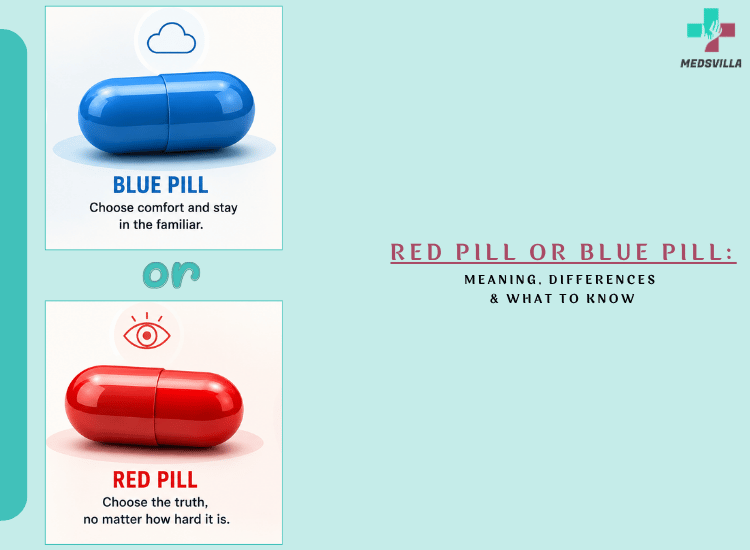
The phrases red pill or blue pill are widely used in internet culture, social media, movies, and everyday conversations. But what do they actually mean? The terms became famous through The Matrix, where the main character, Neo, is offered two choices. The red pill represents a willingness to discover an uncomfortable truth, while the blue pill represents choosing a familiar and comfortable reality.
Over time, these terms developed broader meanings online. People now use “red pill” and “blue pill” in discussions about relationships, politics, society, personal beliefs, and lifestyle choices. This guide explains the red pill or blue pill meaning, their origins, major differences, and how the terms are commonly used today.
What Does Red Pill Mean?
The red pill generally represents choosing to question accepted ideas and search for information that may challenge your existing beliefs. The phrase originated in the 1999 film The Matrix. In the film, Neo must decide whether to continue living in an artificial reality or learn the truth about the world around him. Male Viagra before and after size comparisons can be misleading because Viagra improves erections, not permanent penis size.
In modern conversations, someone may say they have “taken the blue pill or red pill” when they believe they have discovered information that changed their perspective. However, the meaning depends heavily on context. Online communities may use the term differently, and some groups have adopted “red pill” language for specific social or political beliefs. Therefore, seeing the phrase alone does not always tell you exactly what someone believes.
What Does Blue Pill Mean?
The blue pill traditionally represents choosing comfort, familiarity, and the existing version of reality rather than searching for potentially difficult information. In The Matrix, taking the blue pill means returning to normal life without learning the truth about the artificial world.
Today, people may use “blue pill” casually to describe someone who prefers conventional ideas or does not want to challenge commonly accepted beliefs. Like the red pill, its meaning can change depending on the conversation.
Red Pill vs Blue Pill: Key Differences
The easiest way to understand the difference is to look at what each concept represents.
| Feature | Red Pill | Blue Pill |
|---|---|---|
| Basic Idea | Seeking a different or uncomfortable perspective | Staying with a familiar perspective |
| Symbolism | Truth, questioning, awareness | Comfort, familiarity, acceptance |
| Origin | The Matrix | The Matrix |
| Common Use | Internet culture and social discussions | Casual discussions and internet culture |
| Meaning Online | Varies by community | Varies by context |
| Main Theme | Challenging assumptions | Maintaining the status quo |
These descriptions are broad. The terms can have very different meanings depending on who is using them and why.
Where Did the Red or Blue Pill Come From?
The concepts originated in The red or blue pill matrix, a science-fiction film released in 1999. In the movie, Neo learns that the world he experiences is not what it appears to be. Morpheus gives him a choice between two pills.
The red pill allows Neo to discover the truth. The blue pill allows him to return to his previous life without knowing what is really happening. This simple choice became one of the movie’s most memorable ideas. It later entered popular culture and became a metaphor for difficult truths versus comfortable beliefs.
Why Are Red Pill and Blue Pill Terms Popular Online?
Social media has made the terms much more common. People often use “red pill” when discussing ideas that challenge mainstream opinions. Meanwhile, “blue pill” may be used to describe someone who accepts conventional views.
The terms can appear in conversations about relationships, careers, politics, philosophy, entertainment, and personal development. However, online usage can sometimes become more complicated. Some communities use “red pill” as part of a specific ideology or worldview. Because of this, it is important to consider the context before assuming what someone means by “blue pill or red pill”.
Is Taking the Red Pill Always Better?
Not necessarily. The original story presents the red pill as a path toward truth, but real life is more complicated than a movie. Questioning information can be useful. It can help people think critically and recognize assumptions. However, questioning something does not automatically make an alternative claim true.
Good critical thinking means evaluating evidence, comparing reliable sources, and staying open to better information. Simply rejecting mainstream ideas is not the same as discovering the truth.
Is the Blue Pill Always Negative?
No. The blue pill is sometimes portrayed negatively online, but the original metaphor is about a choice between knowledge and comfortable ignorance. In everyday life, people make decisions based on many factors. Not every familiar belief is incorrect, and not every unconventional belief is correct.
A person can reasonably decide not to investigate every controversial topic while still thinking critically about important decisions. The key is understanding why you hold a belief and whether reliable evidence supports it.
Red Pill vs Blue Pill in Relationships
The terms are also frequently used in relationship discussions.
- Red pill may describe a different perspective on dating or relationships.
- Blue pill may describe more conventional relationship expectations.
- These labels can oversimplify complex relationship topics.
- Healthy relationships depend on communication, trust, honesty, and mutual respect.
- A label alone does not determine whether a relationship approach is healthy or effective.
- When reading online advice, check the evidence instead of accepting broad claims based only on a label.
How to Think Critically About Red Pill and Blue Pill Claims
If you encounter these terms online, consider a few simple questions:
What does the person actually mean?
The same term can have different meanings across communities.
What evidence supports the claim?
Look for credible sources rather than relying only on social media posts or videos.
Is the statement too broad?
Claims about entire groups of people are often more complicated than they appear.
Are alternative explanations possible?
Considering different explanations can help prevent confirmation bias.
Is the information current and reliable?
Online discussions can repeat outdated or misleading information. These steps can help you evaluate information without automatically accepting or rejecting it.
Red Pill vs Blue Pill: Which One Is Better?
There is no universal answer. If “blue or red pill” means questioning assumptions and examining evidence, critical thinking can be valuable. But if it means automatically believing an alternative narrative without evidence, it can lead to misinformation. Can I take Viagra with coffee? Moderate coffee is generally not known to directly interact with sildenafil, but too much caffeine may increase side effects such as headache or a fast heartbeat.
Likewise, accepting familiar ideas is not necessarily wrong. However, refusing to question any belief can also limit understanding. The healthiest approach is often somewhere beyond the simple red-pill-versus-blue-pill choice: stay curious, examine evidence, and make informed decisions.
Final Thoughts
The red pill vs blue pill concept began as a memorable choice in The Matrix. The red pill represented discovering an uncomfortable reality, while the blue pill represented returning to a familiar life.
Today, the terms have expanded far beyond the movie. Their meanings can change depending on the community, topic, and context in which they are used.
Rather than focusing only on which “pill” someone chooses, it is more useful to examine the ideas behind the label. Question assumptions, check reliable evidence, and remain open to different perspectives.
References:

