
Fenbendazole Wormer For Dogs: What Worms Does It Treat?
Keeping your dog healthy means protecting them from intestinal parasites that can affect their digestion, energy, and overall well-being. Worm infections are common in dogs, especially puppies and pets that spend time outdoors. Fortunately, several veterinary deworming treatments are available to help manage these parasites. One commonly used option is Fenbendazole Wormer for Dogs.
Fenbendazole is a dewormer that targets several intestinal worm species. It works by interfering with the parasites’ ability to absorb nutrients and produce energy, helping eliminate them from your dog’s body.
But what worms does fenbendazole actually treat? Is it suitable for puppies and adult dogs? Let’s explore its uses, benefits, precautions, and important safety information.
What Is Fenbendazole Wormer For Dogs?
Fenbendazole is an antiparasitic medication belonging to a group of drugs called benzimidazoles. It is commonly available in granules, liquid suspensions, and other veterinary formulations. Explore the fenbendazole for cats dosage chart by weight and understand safe veterinary dosing guidelines.
Veterinarians prescribe it for certain intestinal parasites in dogs. It works by disrupting the worms’ cellular processes, preventing them from maintaining normal energy production.
This medication is commonly sold under veterinary product brands such as Panacur and Safe-Guard. However, the approved uses and instructions may vary depending on the product and country.
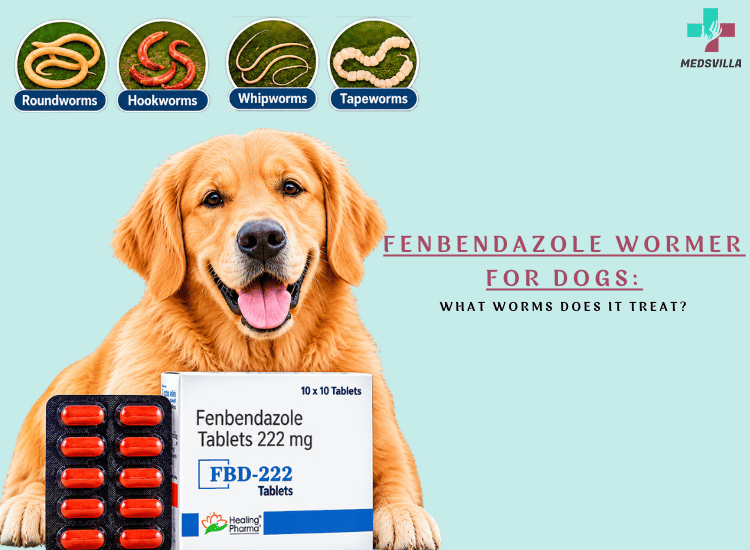
According to approved US product labeling, fenbendazole treats and controls four important groups of intestinal worms: roundworms, hookworms, whipworms, and certain tapeworms.
What Worms Does Fenbendazole Treat in Dogs?
Understanding which parasites a dewormer targets is important before choosing a treatment. It works against various common intestinal worms.
1. Roundworms
Roundworms commonly affect dogs, especially young puppies. Dogs can become infected by swallowing parasite eggs from contaminated soil or through other routes of transmission.
Common signs of roundworm infections include:
- Swollen or bloated abdomen
- Vomiting or diarrhea
- Poor growth in puppies
- Weight loss
- Visible worms in stool or vomit
Fenbendazole is approved for treating certain roundworms, including Toxocara canis and Toxascaris leonina.
Early diagnosis and appropriate treatment help prevent complications and reduce environmental contamination.
2. Hookworms
Hookworms are small intestinal parasites that attach to the intestinal lining and feed on blood. These parasites can pose serious health risks to puppies.
Dogs may become infected through contaminated environments, skin penetration, or other transmission routes.
Common symptoms include:
- Pale gums
- Weakness and tiredness
- Dark or bloody stools
- Diarrhea
- Poor appetite
Fenbendazole treats certain hookworm species, including Ancylostoma caninum and Uncinaria stenocephala.
Because hookworms can cause blood loss and anemia, dogs showing these symptoms should receive prompt veterinary attention.
3. Whipworms
Whipworms are intestinal parasites that live mainly in a dog’s large intestine. Their infections can cause digestive discomfort and ongoing gastrointestinal problems.
Dogs usually become infected by swallowing microscopic eggs from contaminated soil or other environmental sources. Possible symptoms include:
- Frequent diarrhea
- Mucus in stools
- Weight loss
- Reduced appetite
- Occasional blood in stools
Fenbendazole is used to treat Trichuris vulpis, a common whipworm species affecting dogs. Whipworm infections can be difficult to eliminate because their eggs may survive in the environment for long periods. Veterinary follow-up and preventive care are important.
4. Tapeworms
Tapeworms are flat, segmented intestinal parasites that live inside a dog’s digestive tract. Dogs can become infected by swallowing infected intermediate hosts.
Some tapeworm infections cause very few symptoms, while others may result in digestive discomfort. Learn about fenbendazole ivermectin pills, their uses, potential risks, and safety information.
Common signs include:
- Small, rice-like segments around the anus
- Scooting across the floor
- Mild digestive upset
- Occasional weight loss
Fenbendazole is labeled for treating Taenia pisiformis in dogs.
Important: Fenbendazole does not reliably treat every type of tapeworm. In particular, the common flea tapeworm, Dipylidium caninum, requires a different treatment approach, usually involving praziquantel. Flea control is also essential to prevent reinfection.
Can Fenbendazole Help With Giardia in Dogs?
Giardia is a microscopic intestinal parasite, but it is not a worm. It is a protozoan organism that can cause digestive problems in dogs.
Infected dogs may experience:
- Loose or watery stools
- Intermittent diarrhea
- Unpleasant-smelling stools
- Weight loss
- Reduced appetite
Veterinarians may prescribe fenbendazole for Giardia infections in dogs. However, its use and treatment duration depend on veterinary guidance and local product approvals.
Good hygiene is also important. Clean your dog’s living area, remove feces promptly, and wash food and water bowls regularly to help reduce reinfection.
How Is Fenbendazole Wormer For Dogs Administered?
Fenbendazole is generally given orally and is available in different formulations. Granules are commonly mixed with food, while liquid products are administered according to their specific instructions.
Treatment depends on several key factors:
- Your dog’s body weight
- The type of parasite
- Your dog’s age and health condition
- The medication formulation
- The veterinarian’s treatment plan
For example, the US Panacur C canine granule label specifies 50 mg/kg of body weight daily for three consecutive days for its approved indications.
However, this should not be treated as a universal dosing instruction. Different infections and formulations may require different veterinary protocols. Always follow the product label and your veterinarian’s advice.
Is Fenbendazole Safe for Dogs?
Fenbendazole is generally well tolerated when used according to appropriate veterinary instructions. However, like other medications, it may cause side effects in some dogs.
Possible side effects include:
- Vomiting
- Diarrhea
- Reduced appetite
- Mild stomach discomfort
Contact your veterinarian if your dog develops unusual symptoms during treatment.
It is particularly important not to extend treatment or increase the dose without professional advice. The FDA has reported serious blood-related adverse events associated with prolonged, extra-label fenbendazole use in dogs.
Sick puppies, dogs with underlying health conditions, and pets taking other medications should be evaluated by a veterinarian before treatment.
Tips to Prevent Worm Infections in Dogs
Treating an existing worm infection is important, but preventing future infections is equally valuable. Follow these simple steps to help protect your dog:
- Schedule regular fecal testing: Veterinary stool examinations help identify intestinal parasites.
- Maintain good hygiene: Clean your dog’s bedding, feeding area, and living space regularly.
- Remove dog waste promptly: This helps reduce contamination in your yard and surrounding environment.
- Control fleas: Flea prevention helps protect against certain tapeworm infections.
- Follow a deworming schedule: Ask your veterinarian to recommend a schedule based on your dog’s age, lifestyle, and parasite exposure.
- Avoid contaminated food and water: Provide clean drinking water and prevent your dog from eating potentially contaminated materials.
Final Thoughts
Fenbendazole Wormer For Dogs is a commonly used veterinary deworming treatment that helps control several important intestinal parasites, including roundworms, hookworms, whipworms, and certain tapeworms. Find out fenbendazole for humans where to buy and learn about important safety considerations.
It may also be prescribed for Giardia infections under veterinary guidance. However, it does not treat every type of parasite, and the correct treatment depends on an accurate diagnosis.
Before giving fenbendazole to your dog, consult a veterinarian to confirm the appropriate medication, dosage, and treatment duration. Combining proper deworming with regular veterinary checkups and good hygiene can help keep your furry companion healthy and comfortable.
Disclaimer: This article is for educational purposes only and does not replace professional veterinary advice. Always consult a qualified veterinarian before starting medication for your dog.
References:
- https://www.ncbi.nlm.nih.gov/books/NBK544251/
- https://www.mayoclinic.org/diseases-conditions/tapeworm/symptoms-causes/syc-20378174

