
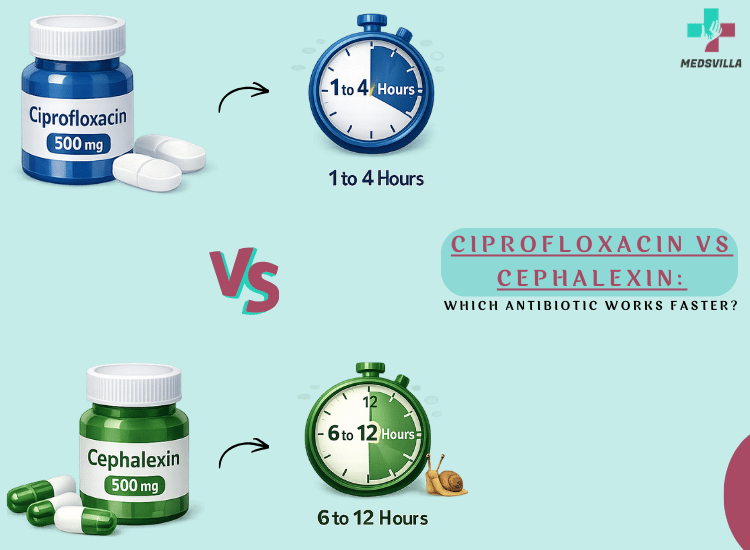
Ciprofloxacin vs Cephalexin: Battle of the Antibiotics
When it comes to treating bacterial infections, doctors have several antibiotics available. Two commonly prescribed options are Ciprofloxacin vs Cephalexin. Both medications are effective against bacterial infections, but they work in different ways and are used for different conditions.
Understanding the difference between Ciprofloxacin and Cephalexin can help patients know why a doctor may choose one antibiotic over the other. These medications vary in their mechanism of action, effectiveness, dosage, and possible side effects. Augmentin vs Doxycycline which is stronger, is a common comparison when choosing antibiotics for bacterial infections such as respiratory or skin infections.
In this guide, we will compare Ciprofloxacin and Cephalexin, including how they work, their uses, recommended dosages, and safety considerations.
Overview of Ciprofloxacin vs Cephalexin
| Aspect | Ciprofloxacin | Cephalexin |
|---|---|---|
| Mechanism of Action | Stops bacterial DNA replication by blocking DNA gyrase and topoisomerase enzymes | Weakens bacterial cell walls by targeting Penicillin-Binding Proteins (PBPs) |
| Spectrum | Broad spectrum, mainly effective against Gram-negative bacteria | Primarily effective against Gram-positive bacteria |
| Common Uses | UTIs, pneumonia, skin infections, STIs, eye and ear infections | Respiratory infections, skin infections, bone infections, UTIs |
| Dosage Forms | Oral tablets, capsules, extended-release tablets, IV solution | Oral tablets, capsules, oral suspension |
| Drug Interactions | Higher number of drug interactions | Fewer drug interactions |
Both antibiotics are widely used in medical practice, but are prescribed depending on the type of infection and the bacteria involved.
Ciprofloxacin vs Cephalexin Mechanism of Action
How Ciprofloxacin Works
Ciprofloxacin belongs to the fluoroquinolone antibiotic class. It works by blocking bacterial enzymes responsible for DNA replication, including DNA gyrase and topoisomerase IV.
By preventing bacteria from copying their DNA, the medication stops bacterial growth and eventually kills the infection. This mechanism makes Ciprofloxacin highly effective against Gram-negative bacteria, which commonly cause infections such as Urinary Tract Infections (UTIs).
Because of its broad activity, cipro vs keflex is often used when other antibiotics are not effective.
How Cephalexin Works
Cephalexin is an antibiotic from the first-generation cephalosporin group used to fight bacterial infections. It works differently from Ciprofloxacin.
Instead of targeting bacterial DNA, Cephalexin interferes with the formation of bacterial cell walls. It binds to Penicillin-Binding Proteins (PBPs), which are essential for maintaining cell wall structure.
When the cell wall weakens, the bacteria cannot survive and eventually break apart. Cephalexin is particularly effective against Gram-positive bacteria, which commonly cause skin and respiratory infections. When comparing antibiotics, people often ask which is stronger cephalexin or ciprofloxacin, for treating infections like UTIs.
Cephalexin vs Ciprofloxacin Uses
Is Cephalexin the same as Cipro? These medications work differently and treat different bacteria. Both antibiotics treat bacterial infections, but their applications differ.
Ciprofloxacin Uses
Ciprofloxacin is a broad-spectrum antibiotic used to treat many types of infections, including:
- Uncomplicated and complicated Urinary Tract Infections (UTIs)
- Pneumonia and chest infections
- Skin and soft tissue infections
- Bone and joint infections
- Sexually Transmitted Infections (STIs)
- Eye infections such as conjunctivitis
- Ear infections
It is also used in serious conditions such as anthrax exposure and plague treatment, making it an important antibiotic in modern medicine.
Cephalexin Uses
Cephalexin is commonly prescribed for bacterial infections when the bacteria are sensitive to cephalosporin antibiotics.
Doctors often use Cephalexin for:
- Respiratory tract infections
- Skin infections
- Bone infections
- Ear infections
- Genital infections
- Urinary tract infections
Since Cephalexin primarily targets Gram-positive bacteria, it is frequently used for skin and soft-tissue infections caused by Staphylococcus or Streptococcus.
Cephalexin vs Ciprofloxacin for UTIs
Urinary tract infections (UTIs) are among the most frequently diagnosed bacterial infections worldwide. Cephalexin can be effective for uncomplicated UTIs, particularly when the bacteria are sensitive to the medication.
Ciprofloxacin often works better against E. coli, the bacteria that cause many UTIs. Because of its broader antibacterial activity, doctors may choose Ciprofloxacin for complicated or recurrent UTIs.
Studies comparing the two antibiotics have shown that Ciprofloxacin may provide better outcomes in certain lower urinary tract infections, although both medications are generally well tolerated.
Ciprofloxacin vs Cephalexin Dosage
Is cephalexin the same as ciprofloxacin? The answer is no, because they belong to different antibiotic classes. The dosage of these Cephalexin vs Ciprofloxacin antibiotics depends on the type and severity of the infection.
Cephalexin Dosage
Typical Cephalexin dosage includes:
- Adults: 250 mg every 6 hours or 500 mg every 12 hours as prescribed.
- Children: 25–100 mg/kg/day, divided into multiple doses
Cephalexin is available in several forms, including:
- Oral capsules
- Oral tablets
- Oral suspension powder
Ciprofloxacin Dosage
Common Ciprofloxacin dosage recommendations include:
- 250 mg to 500 mg every 12 hours for most UTIs
- 500 mg to 750 mg every 12 hours for bone or joint infections
- Treatment duration typically ranges from 3 to 14 days, though some infections require longer therapy.
Ciprofloxacin is available as:
- Oral tablets
- Capsules
- Extended-release tablets
- Intravenous (IV) solution
Cephalexin vs Ciprofloxacin for Skin Infections
Skin infections are frequently caused by Gram-positive bacteria, including Staphylococcus aureus and Streptococcus pyogenes. Cephalexin works particularly well against these bacteria and is often the first-line treatment for mild to moderate skin infections.
Ciprofloxacin may be considered when infections involve Gram-negative bacteria or when mixed bacterial infections are suspected. Is Cipro the same as cephalexin, but they are different antibiotics used to treat different types of bacterial infections.
Ciprofloxacin vs Cephalexin Drug Interactions
Drug interactions are an important consideration when prescribing antibiotics. Patients often compare cephalexin vs Cipro to understand which medication may work faster for infections.
Ciprofloxacin has a higher number of drug interactions, including:
- 155 major interactions
- 407 moderate interactions
- 86 minor interactions
These interactions may occur with medications such as antacids, blood thinners, and certain heart medications. Doctors sometimes consider Keflex vs Cipro for UTI, since both antibiotics may be prescribed depending on the infection severity.
Cephalexin has significantly fewer interactions, including:
- 3 major interactions
- 32 moderate interactions
Because of this, Cephalexin may be preferred for patients taking multiple medications.
Food and Lifestyle Interactions
Ciprofloxacin has specific dietary recommendations. Is amoxicillin antibiotic that is widely prescribed to treat infections like ear infections, throat infections, and certain urinary tract infections. Are Cipro and cephalexin the same? Both medications have different mechanisms and bacterial coverage.
Patients taking Ciprofloxacin should avoid dairy products like milk or yogurt at the same time as the medication, as calcium can reduce its absorption. Calcium-fortified foods and supplements may also interfere with the medication. Cephalexin does not have significant food restrictions, making it easier to take with meals.
Ciprofloxacin vs Cephalexin Side Effects
Both antibiotics can cause side effects, although most are mild.
Common Ciprofloxacin Side Effects
- Nausea
- Muscle pain
- Joint pain
- Headache
- Gastrointestinal discomfort
Rare but serious effects include tendon inflammation or nerve problems.
Common Cephalexin Side Effects
- Diarrhea
- Nausea
- Vomiting
- Stomach pain
- Vaginal itching or discharge
Patients should contact a healthcare provider if severe side effects occur.
Important Considerations Before Choosing an Antibiotic
Several factors influence whether Ciprofloxacin or Cephalexin is prescribed:
Type of infection:
Cephalexin is better for Gram-positive infections, while Ciprofloxacin treats a wider range of bacteria. How Cipro vs cephalexin differ in effectiveness and bacterial coverage.
Patient health conditions:
Kidney function, allergies, and previous antibiotic use may affect treatment decisions. Cephalexin versus ciprofloxacin is important when choosing the right antibiotic for bacterial infections.
Antibiotic resistance:
Local resistance patterns can influence which antibiotic works best. The comparison of cephalexin vs ciprofloxacin for UTI helps determine which antibiotic may work better for certain urinary infections.
Risk of side effects:
Ciprofloxacin may carry a higher risk of certain side effects. Doctors sometimes decide between cephalexin or ciprofloxacin for UTI, depending on the bacteria causing the infection.
Takeaway
Ciprofloxacin and Cephalexin are both effective antibiotics used to treat bacterial infections, but they work differently.
Ciprofloxacin is a broad-spectrum antibiotic that disrupts bacterial DNA replication, making it effective against many Gram-negative bacteria. It is commonly used for UTIs, respiratory infections, and serious bacterial diseases.
Cephalexin, a first-generation cephalosporin, works by weakening bacterial cell walls and is particularly effective against Gram-positive infections, including skin and respiratory infections.
Choosing between Ciprofloxacin vs Cephalexin depends on the infection type, bacterial sensitivity, patient health factors, and potential side effects. A healthcare professional should always determine the most appropriate antibiotic for treatment.
FAQ
Q: Which is better: Ciprofloxacin or Cephalexin?
The better antibiotic depends on the infection type. Ciprofloxacin treats a wider range of bacteria, while Cephalexin is often used for infections caused by Gram-positive bacteria.
Q: Which antibiotic is stronger: Cephalexin or Ciprofloxacin?
Ciprofloxacin is generally considered stronger because it works against a broader spectrum of bacteria. Cephalexin mainly targets Gram-positive infections.
Q: Can Ciprofloxacin and Cephalexin be taken together?
These antibiotics should only be taken together if prescribed by a doctor. Combining them may increase the risk of side effects and is not usually necessary.
Q: Is Ciprofloxacin more effective than Cefixime?
The effectiveness depends on the infection. Ciprofloxacin has broader antibacterial coverage, but Cefixime may be preferred for certain bacterial infections.
References:

