
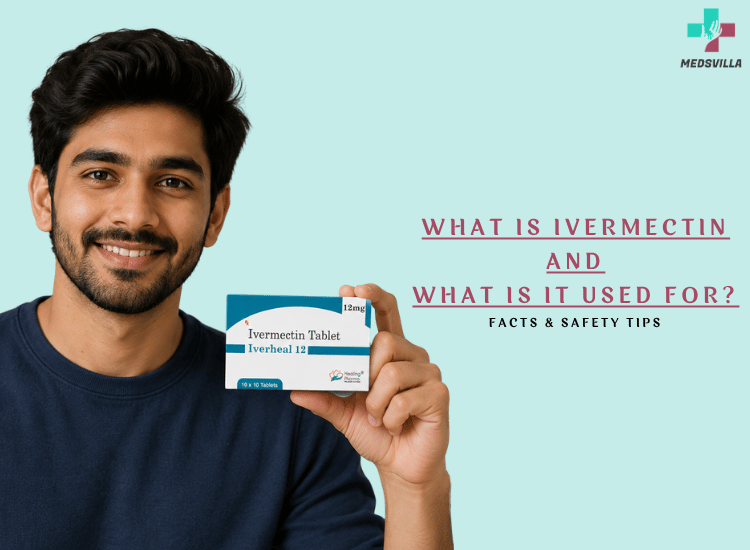
What Is Ivermectin And What Is It Used For? Facts & Safety Tips
Ivermectin is a trusted antiparasitic medicine. It is highly effective against several parasitic infections when prescribed appropriately.
Despite its long history of medical use, ivermectin has also been surrounded by confusion and misinformation, making it important to understand what it is, how it works, and when it should be used. This guide explains ivermectin, its uses, benefits, side effects, and safety.
What Is Ivermectin?
Ivermectin is a prescription medication that belongs to a class of drugs called antiparasitic agents. It works by targeting parasites that infect the human body. It fights parasitic infections, not bacteria or viruses. Ivermectin dosage for humans by weight should be determined by a healthcare provider.
Ivermectin tablets treat parasitic infections. Available as tablets, lotions, and more:
- Oral tablets
- Topical creams
- Lotions
- Prescription formulations for specific skin conditions
Your condition determines the tablets you need. Uses for ivermectin include treating certain parasitic infections in humans.
What Is Ivermectin Used For?
Ivermectin treats several parasitic infections in humans. Common medical uses include:
River Blindness (Onchocerciasis)
One of ivermectin’s most recognized uses is treating river blindness, a parasitic disease spread by infected blackflies. It kills immature parasites and helps prevent complications.
Intestinal Strongyloidiasis
Doctors commonly prescribe tablets to treat strongyloidiasis, an intestinal infection caused by Strongyloides stercoralis. Treatment helps eliminate the parasite and prevent serious complications.
Scabies
Doctors often prescribe a tablet for scabies, especially in severe or widespread cases or when topical treatments have not worked. It kills the mites that cause the infection.
Head Lice
Prescription lotion is an effective treatment for head lice. It kills lice and reduces the need for repeated treatments when used correctly.
Rosacea
Topical cream treats inflammatory rosacea bumps. It helps reduce redness and skin irritation in many patients.
How Does Ivermectin Work?
Ivermectin paralyzes and kills parasites. It binds to specific nerve and muscle cells, causing paralysis and eventually killing the parasites. It targets parasites while protecting healthy human nerve cells at recommended doses. Because of this targeted action, tablets have become one of the most widely used antiparasitic medications worldwide.
Benefits of Ivermectin
When prescribed correctly, tablets offer several important benefits:
- Effectively treats multiple parasitic infections
- Helps relieve symptoms quickly
- Prevents parasites from spreading
- Available in oral and topical forms
- Generally well tolerated by most patients
- Used worldwide with decades of clinical experience
Correct diagnosis and proper treatment improve its effectiveness. The use of ivermectin is based on your condition.
How Is Ivermectin Taken?
The dosage of ivermectin varies depending on several factors, including your body weight, age, overall health, medical condition, and the type of infection being treated. Your healthcare provider will determine the appropriate dose based on these factors. If you are prescribed oral ivermectin tablets, they are generally taken on an empty stomach with a full glass of water.
Always follow your doctor’s dosage instructions carefully, and never increase, decrease, or skip a dose without medical advice. What is ivermectin good for includes treating several parasitic infections. For topical medicine products, such as creams or lotions, apply them exactly as directed and avoid contact with the eyes unless instructed by your healthcare provider.
Additionally, never use veterinary medicine products intended for animals, as they may contain different concentrations and inactive ingredients that are not safe for human use.
Possible Side Effects
Ivermectin can cause side effects. Most are mild and temporary. Common side effects include:
- Nausea
- Diarrhea
- Dizziness
- Headache
- Fatigue
- Mild skin rash
- Itching
Some people may experience reactions related to dying parasites rather than the medication itself. Seek emergency medical care if you develop:
- Difficulty breathing
- Severe allergic reaction
- Swelling of the face or throat
- Severe skin reactions
- Vision changes
- Confusion or seizures
No. Ivermectin is an antiparasitic medicine, not an antibiotic.
Who Should Avoid Ivermectin?
- Are pregnant or breastfeeding
- Have liver disease
- Have a weakened immune system
- Check for prescription medicines interactions.
- Have allergies to ivermectin or its ingredients
What is ivermectin fenbendazole used for refers to two antiparasitic medicines. Children should only receive medicine when prescribed by a qualified healthcare professional.
Important Safety Tips
Using medicine safely is essential for achieving the best results.
- Use Only When Prescribed
Take the tablet only as prescribed.
- Follow the Correct Dose
Never take extra tablets hoping for faster results.
- Complete Treatment
Finish the recommended treatment unless your doctor advises otherwise.
- Avoid Self-Medication
Do not use ivermectin for unapproved conditions without medical advice.
- Watch for Side Effects
Seek medical advice if you notice unusual symptoms.
- Store Properly
Keep medicine at room temperature away from moisture, heat, and direct sunlight.
- Keep Out of Children’s Reach
Store medications safely to prevent accidental ingestion.
Final Thoughts
Ivermectin is an effective antiparasitic medication that has helped millions of people worldwide treat specific parasitic infections. It is commonly use for conditions such as river blindness, strongyloidiasis, scabies, head lice, and rosacea. Panacur vs ivermectin compares two medications used to treat different parasitic infections. When taken correctly under medical supervision, it can be both safe and highly effective.
FAQ
Q: Is ivermectin an antibiotic?
Ivermectin treats parasitic infections and is not an antibiotic.
Q: Can ivermectin treat viral infections?
Ivermectin is approved for specific parasitic infections.
Q: Is ivermectin safe?
When prescribed appropriately and taken as directed, ivermectin has a well-established safety profile for approved uses.
Q: Can I buy ivermectin without a prescription?
Availability varies by country. In many regions, ivermectin for human use requires a prescription from a licensed healthcare provider.
References:
- https://www.ncbi.nlm.nih.gov/books/NBK544306/
- https://www.mayoclinic.org/drugs-supplements/ivermectin-oral-route/description/drg-20064397

