
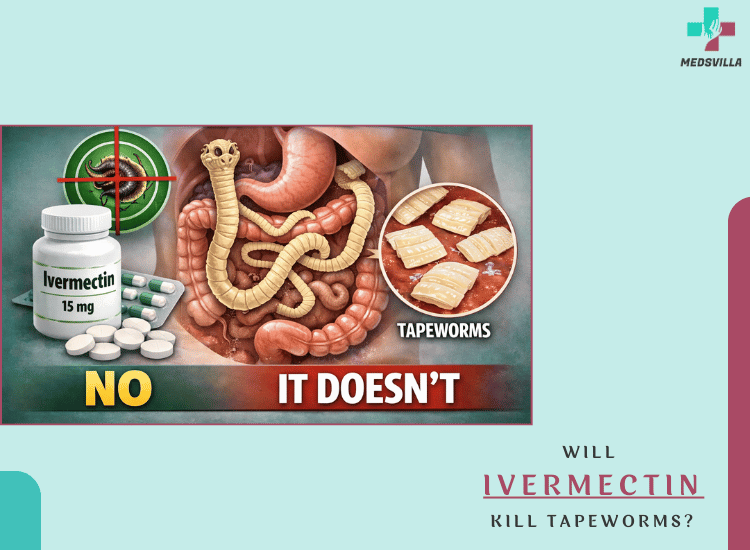
Does Ivermectin Kill Tapeworms?
When facing a parasitic infection, it’s crucial to use the right medication for the specific parasite. Many people search online, wondering will ivermectin kill tapeworms or can ivermectin kill tapeworms, especially after encountering mixed and often misleading information on social media and various websites. While ivermectin is a well-known antiparasitic medication, it is not effective against tapeworm infections. This article explains the medical facts, correct treatments, and safety concerns in simple terms.
Does Ivermectin Kill Tapeworms?
The short and definitive does ivermectin kill tapeworms? The answer is no. Ivermectin is a broad-spectrum antiparasitic agent, but its effectiveness is highly specific. It is approved and highly effective against certain parasites like roundworms (nematodes) and external parasites like mites and lice.
However, it has little to no effect on cestodes, which are a class of flatworms that includes tapeworms. Using ivermectin for a tapeworm infection would be ineffective and could delay proper treatment. is ivermectin an antibiotic, but ivermectin is actually an antiparasitic medication, not an antibiotic.
What Are Tapeworms?
Tapeworms are a type of intestinal parasite. Humans typically get infected by consuming undercooked meat from an infected animal (like beef, pork, or fish) or through contact with contaminated food or water.
- Common Types: Taenia saginata(beef tapeworm), Taenia solium (pork tapeworm), Diphyllobothrium latum (fish tapeworm).
- Appearance: They have long, flat, ribbon-like bodies made of segments and can grow several meters long inside the intestines.
- Symptoms: Often asymptomatic, but can include abdominal pain, nausea, weakness, loss of appetite, weight loss, and visible worm segments in stool.
Ivermectin kill tapeworms, even though medical evidence shows it is ineffective against tapeworm infections. How long does it take for ivermectin to kill parasites depends on the type of parasite, dosage, and the condition being treated.
Ivermectin Before and After Photos
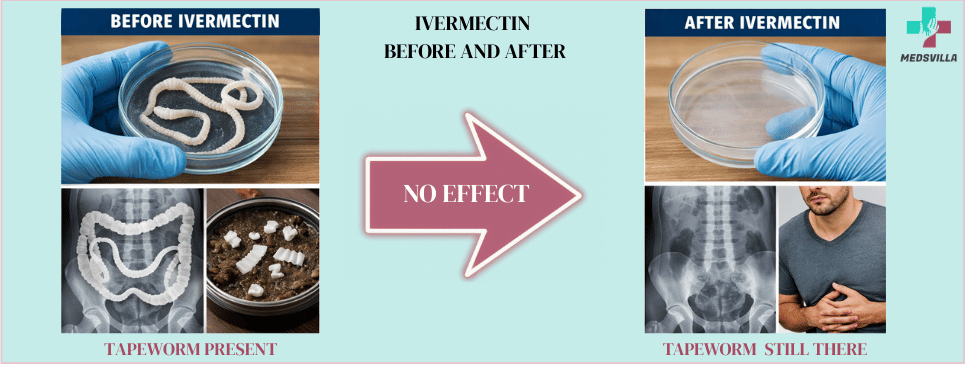
Many online platforms display “ivermectin before and after photos”, but these images are often misleading or unrelated to tapeworm infections. Ivermectin may improve conditions like scabies or strongyloidiasis, but it does not remove tapeworms.
Why Ivermectin Does Not Kill Tapeworms
The reason lies in biochemistry and the mechanism of action. The term Who ivermectin is often searched to understand the World Health Organization’s guidance on ivermectin’s approved uses.
Different Nervous Systems: Ivermectin binds to specific channels in the nerve and muscle cells of invertebrates, leading to paralysis and death. This mechanism is highly effective against roundworms and arthropods. Tapeworms (cestodes), however, have a different physiological structure. They lack the specific glutamate-gated chloride channels that ivermectin targets, making them naturally resistant to the drug.
Specialized Medications Exist: Tapeworms are treated with a different class of drugs called cestocides, such as praziquantel and niclosamide. These drugs work by disrupting the tapeworm’s tegument (outer surface), making it vulnerable to digestion by the host’s immune system and enzymes.
What Medications Kill Tapeworms?
The standard and effective treatments for tapeworm infections are:
- Praziquantel (Biltricide): The most common medication. It is a single-dose treatment that is highly effective against most tapeworm species.
- Niclosamide: An alternative medication, also taken as a single dose.
- Albendazole: Sometimes used, particularly for certain types of larval tapeworm infections (like cysticercosis).
Important: These are prescription medications. A doctor must diagnose the type of tapeworm to prescribe the correct drug and dosage.
What Happens If Someone Takes Ivermectin for Tapeworms?
If a person with a tapeworm infection takes ivermectin, the treatment will be ineffective because ivermectin does not kill tapeworms. The parasites will remain in the intestines, continuing to cause symptoms such as abdominal discomfort, nutritional deficiencies, and ongoing health complications.
This misuse can also delay proper diagnosis and appropriate treatment, allowing the infection to persist for longer than necessary. In cases involving Taenia solium (pork tapeworm), delayed treatment increases the risk of developing cysticercosis, a serious condition in which tapeworm larvae migrate to vital tissues, including the brain.
Additionally, taking ivermectin unnecessarily exposes the person to potential side effects—such as dizziness, nausea, and gastrointestinal upset—without providing any therapeutic benefit, making self-treatment both ineffective and potentially harmful.
How Tapeworm Infections Are Diagnosed
Proper diagnosis is essential for effective tapeworm treatment. Doctors typically begin with stool sample analysis, the primary diagnostic method for identifying tapeworm eggs or worm segments (proglottids) under a microscope.
In certain cases, blood tests may be ordered to detect antibodies, especially when the body is responding to a more invasive infection such as cysticercosis. If cysticercosis is suspected, advanced imaging tests like CT scans or MRI scans are used to locate cysts in the body or brain, helping doctors determine the severity of the infection and the most appropriate treatment plan.
Is Ivermectin Dangerous if Used Incorrectly?
Yes. Ivermectin is a prescription medication with established uses and risks.
- Established Uses: For humans, it is FDA-approved for parasitic infections like strongyloidiasis (intestinal roundworm) and onchocerciasis (river blindness). It is also commonly used in veterinary care.
- Risks of Misuse:
- Side Effects: Even at correct doses, it can cause dizziness, nausea, diarrhea, and rash.
- Overdose: Taking large doses, especially formulations meant for large animals, can lead to severe toxicity, including hypotension, seizures, coma, and even death.
- Drug Interactions: It can interact with other medications, such as blood thinners.
- Key Point: Ivermectin should only be taken when prescribed by a doctor for a condition it is known to treat. Self-medicating, especially with veterinary products, is dangerous.
Ivermectin Review & Ratings: For Its Actual Uses
It is a well-established antiparasitic medication that receives strong Ivermectin reviews when used for its approved medical purposes, such as treating strongyloidiasis, scabies, and certain parasitic infections.
Many users on trusted online pharmacies like Medsvilla.com and Ethan Parker report positive experiences when ivermectin is taken under proper medical guidance. Customers often highlight its effectiveness, affordability, and ease of use for doctor-recommended conditions.
Overall, ivermectin earns high ratings for safety and performance when prescribed correctly. To save on your purchase, you can apply the Medsvilla.com discount code MV10 at checkout and enjoy additional savings.
Conclusion
Ivermectin is a powerful drug, but it is not a universal parasite killer. It does not kill tapeworms. If you suspect a tapeworm infection, it is essential to consult a healthcare provider for proper diagnosis.
The correct treatment will involve specific cestocidal drugs like praziquantel. Never self-medicate with ivermectin or any antiparasitic drug, as using the wrong medication can be ineffective and harmful. Always follow evidence-based medical guidance for treatment.
Pet owners frequently ask will ivermectin kill tapeworms in dogs, yet veterinarians usually prescribe other dewormers for tapeworms. Medical experts agree that will ivermectin kill tapeworms in humans has a clear answer: no, it is not an effective treatment. Will ivermectin kill tapeworms in cats, but cats require specific antiparasitic medications prescribed by a veterinarian.
FAQ
Q: How to Take Ivermectin?
Ivermectin should only be taken when prescribed by a healthcare professional and for approved indications. It is usually taken orally with water, sometimes on an empty stomach, depending on the condition being treated.
Q: Can ivermectin be used as a general dewormer?
No. Different worms require different medications.
Q: What is the best treatment for tapeworms?
Praziquantel is the most commonly prescribed option.
Q: Are tapeworm infections serious?
Some can be mild, but others may cause serious complications if untreated.
Q: Can tapeworms go away on their own?
Rarely. Most cases require prescription medication.
References:
- https://www.drugs.com/ivermectin.html
- https://www.mayoclinic.org/diseases-conditions/tapeworm/diagnosis-treatment/drc-20378178

